What Is the Best Way to Reinforce a Handle Hole on a Paper Bag?
Reclaimed packaging, especially paper bags, holds a special charm in the world of eco-friendly storage and reuse. But any reuse hobbyist—myself included, with over a decade in turning odds and ends into reliable storage solutions—knows that when it comes to handles, paper bags can quickly become unreliable. Their weak points, especially handle holes, often spell premature failure under loads that might feel like just a few crates of paperbacks to us, but to the bag, it’s a small mountain.
So how do we reinforce these vulnerable spots for trustworthy, load-worthy reuse? In this article, I’ll guide you through the best techniques and tools—leaving flimsy fixes like floral wire behind—and instead, building solid, load-rated reinforcements using canvas tape (25 mm), cardboard sandwiches, and PVA edge hardening. Plus, I’ll share my tool picks that ensure clean, precise work: parallel-action pliers and side cutters. Let’s make those paper bags ready to carry the equivalent of a few paperback crates, plus or minus 1 mm!
Why Reinforce Handle Holes on Paper Bags?
Picture a book library shelf: each book’s spine needs to hold up without tearing or sagging. Similarly, a paper bag’s handle hole experiences concentrated stress every time you pick up the bag. Overloaded or poorly reinforced, the hole can tear, damaging your carefully reclaimed packaging and spoiling your storage effort.
Paper is inherently weak around punched holes. The fibers break, edges fray, and soon you’re holding a limp bag instead of a sturdy tote. Reinforcing not only extends bag life but also builds confidence to carry heavier contents, increasing your reuse options.
The Key Causes of Handle Hole Failure
- Material Weakness: The paper itself is thin or degraded.
- Tearing on Drilling or Punching: Ragged edges that propagate cracks.
- Poor Load Distribution: Stress concentrates around a thin rim of fiber.
- Insufficient Reinforcement: Weak or flimsy wire loops or tape.
Choosing the Right Reinforcement Materials
Canvas Tape (25 mm Width): The Heavy-Duty Wrap
Think of 25 mm wide canvas tape as the denim jacket for paper bags—a sturdy layer that resists tearing and spreads tension.
- Advantages: High tensile strength, good adhesion, and flexibility.
- Application: Wrap the edge of the hole before drilling or punching, creating a robust protective rim.
- Load Capacity: Spreads load like a crate of trade paperbacks rather than a single hardcover.
Cardboard Sandwich: Reinforcing Layers Like a Sturdy Spine
Sandwiching the paper handle area between layers of durable cardboard significantly boosts its load capacity. This approach mimics layering books in a library spine for extra support.
- Material Choice: Use reclaimed corrugated cardboard, ideally with the flutes aligned to absorb tensile forces.
- Thickness: Two to three layers provide a solid 'sandwich' to distribute stress.
- Bonding: Use PVA glue to bind layers into a robust panel before creating holes.
PVA Edge Hardening: The Invisible Armor
PVA glue doesn't just bond—it also hardens paper edges, transforming the fragile rim of a hole into a resin-hardened rim that resists tearing.
- Method: Brush around and inside the drilled hole edges, letting the PVA soak and dry fully.
- Effect: Significantly reduces fiber fraying and improves the tear resistance of the hole.
- Note: Start with thin coats; multiple layers build stiffness without brittleness.
Prepare Before You Drill: Avoid Ragged, Tear-Prone Holes
One of the crudest mistakes in handle hole preparation is rushing into drilling without pre-strengthening, leading to ragged holes that act like tear starters. Here’s how Additional info to avoid it:
- Apply the canvas tape strip over the proposed hole area on both sides of the bag, overlapping the hole perimeter by ~5 mm.
- Create a cardboard sandwich patch behind the area, glued securely with PVA glue and allowed to dry thoroughly.
- Drill the hole gently with a sharp, properly sized bit. Ideally, use a hand drill or a well-secured drill press to prevent uneven pressure or sudden slips.
- Brush PVA around the hole edges immediately after drilling to harden and seal the fibers.
Tool Talk: Parallel-Action Pliers and Side Cutters
Quality tools make the difference between a professional, lasting reinforcement and a haphazard job. Here’s what to look for:
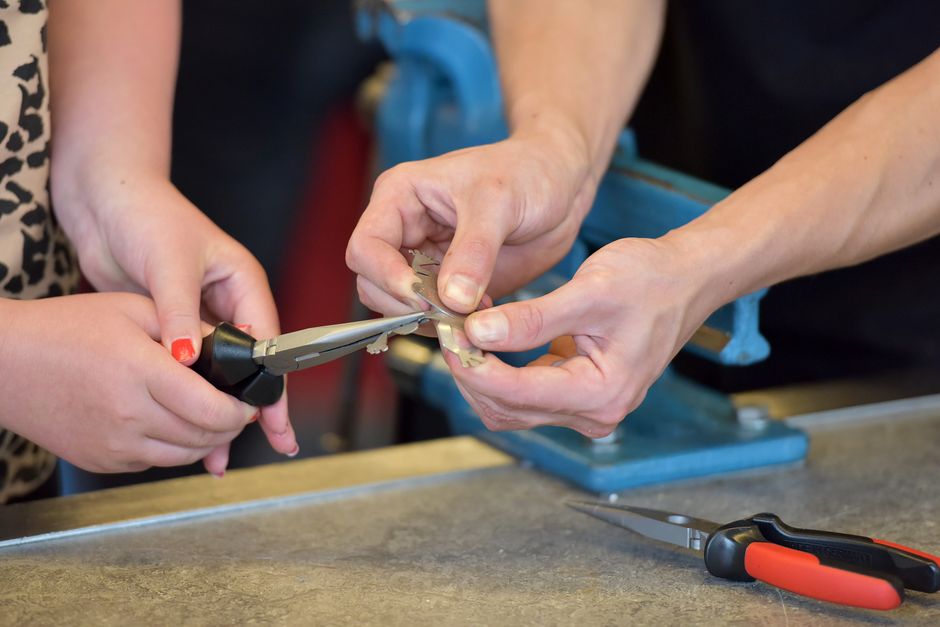
Parallel-Action Pliers
Unlike regular pliers, parallel-action pliers maintain their jaws perfectly parallel throughout their range. This means:
- Clean, even bends: Great for bending wire or metal reinforcements without leaving kinks that cause stress points.
- Precision: Allows controlled shaping of reinforcement brackets or handles.
- Less Material Fatigue: Smooth, clean edges prevent premature breakage.
Side Cutters
For cutting wire or even trimming cardboard tabs, side cutters are the go-to tool:
- Clean Cuts: Efficient wire cutting without crushing or ragged edges.
- Safety: Cuts away from the user and minimizes burrs, preventing handle slippage and tears.
- Durability: Avoids the frustration of cheap cutter blades that dull or chip quickly.
Step-By-Step: Reinforcing a Paper Bag Handle Hole
- Gather Materials: 25 mm canvas tape, reclaimed corrugated cardboard, PVA glue, drill with the correct bit, parallel-action pliers, side cutters. https://sophiasparklemaids.com/what-tape-works-to-start-a-handle-wrap-without-it-sliding/
- Inspect Your Paper Bag: Check for any damage near handle holes; if severely damaged, a full patch may be required.
- Cut a Cardboard Patch: Create a sandwich patch roughly 5 cm square, three layers thick, glued with PVA and dried overnight.
- Apply Canvas Tape: Stick strips of 25 mm canvas tape on the bag’s inside and outside around the handle hole area, overlapping edges by ~5 mm.
- Fix Cardboard Patch: Glue the cardboard sandwich behind the taped area, pressing firmly and letting dry.
- Drill the Hole: Using a sharp drill bit one size larger than the handle cord diameter, create a clean hole through the sandwich and bag.
- Brush PVA Edge Hardening: Immediately brush PVA glue around the hole edges inside and out, allow to dry completely.
- Insert Reinforced Handle: If your reinforcement includes wire loops for handles, bend these neatly with parallel-action pliers and cut precisely with side cutters.
- Final Inspection: Test load the bag gently, simulate carrying a few hardcover books worth of weight (~3-5 kg) to ensure no immediate tearing occurs.
Additional Tips for Reuse and Long-Term Reliability
- Store reinforced bags flat or upright, keeping the handle areas free of crushing pressure.
- Inspect periodically for wear; reapply PVA glue to holes if fibers begin to loosen.
- Avoid flimsy wire loops or threads as handles; opt for thicker cords or fabric strips reinforced with canvas tape.
- If drilling multiple holes, leave at least 2 cm between holes to maintain structural integrity.
Summary Table: Reinforcement Options and Effects
Technique Material Needed Effect on Load Capacity Best For Canvas Tape (25 mm) Canvas tape, adhesive Increases rim tensile strength; prevents tearing Easy, fast reinforcement of existing holes Cardboard Sandwich Corrugated cardboard, PVA glue Distributes load; boosts overall stiffness Heavy load bags; long-term reuse PVA Edge Hardening PVA glue Seals fibers to prevent fraying and tears Finishing touch post-drilling for durabilityFinal Thoughts
Reclaiming and reusing paper bags is a bit like curating books into a personal library—you want them to last, function well, and convey a sense of care. Reinforcing handle holes isn’t glamorous, but it’s essential foundation work. With a few tools, some canvas tape, well-prepared cardboard layers, and patient edge hardening with PVA, you’ll transform fragile, torn spots into trusty, reusable handles capable of bearing meaningful loads—think a stack of paperbacks or a crate of stationery—without a dreaded sudden drop.
Equip yourself not with floral wire and hope, but with precision tools like parallel-action pliers and side cutters, and embrace careful preparation over lazy anchoring. Your paper bags—and your storage solutions—will thank you for it.